The project’s two clinical trials aim to validate innovative triage and treatment strategies for children with fever in low-resource settings.


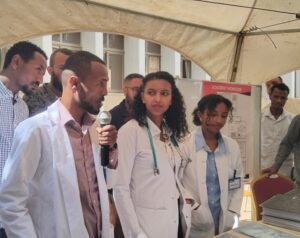
A Historic First for Hiwot Fana Hospital
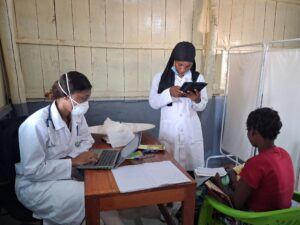
Last week, the EChiLiBRiST project reached a decisive milestone as Clinical Trial 2 (CT2) officially commenced in Harar, Ethiopia. With this launch, the project’s clinical trials are now active across all four African research sites: Lambaréné (Gabon), Maputo and Mopeia (Mozambique), and Harar (Ethiopia).
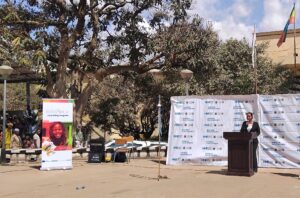
The launch at Hiwot Fana Hospital, coordinated by Haramaya University, establishes a new era of medical research at the facility, as the first clinical trial to be conducted there. This marks a major step forward for local research capacity, made possible by the commitment of the researchers and clinicians onsite and their close collaboration with the project partners. To mark the important achievement, the team organised a launch event attended by high-level university and hospital representatives, the regional health bureau, and community leaders. Recruitment is now officially underway following a successful site initiation visit earlier this month.
“We are proud to announce the launch of the ECHILIBRIST trial at its site in Ethiopia — a major milestone for the project, with all trial sites are now fully operational. This achievement reflects the dedication, coordination, and commitment of our partners, investigators, and site teams,” Shared Dr Lola Madrid, co-leader of the Clinical Trials work package. “I am incredibly grateful for the collaborative effort that has made this possible. We now look forward to advancing high-quality research that will generate meaningful evidence and impact patient care.”
Two Trials, One Goal: Better Outcomes for Children with Fever
The EChiLiBRiST project consists of 2 ambitious clinical trials designed to transform how paediatric fevers are managed in hospitals in Africa, where febrile illness among children carries the highest risk of mortality.
Clinical Trial 1 (CT1) is ongoing in in Lambaréné, Gabon and Mopeia, Mozambique, with over 500 participants enrolled to date. It will validate a novel risk-stratification strategy integrating rapid, point-of-care biomarker testing into routine triage of children presenting with fever at health facilities, with the aim of supporting healthcare workers to make life-saving admission decisions.
Running in parallel with this trial, CT2 has been launched in Maputo, Mozambique and Harar, Ethiopia. The objective is to test whether a low-cost nutritional supplement, L-Citrulline, can have high-impact results to prevent severity and enhance the recovery of hospitalised children. Patients with elevated levels of the biomarker sTREM-1, at higher risk of severity and death, will be randomly assigned to receive either L-Citrulline or a placebo; their progress is then monitored at key intervals to evaluate the intervention’s long-term impact in children’s health.
A Step Forwards for Paediatric Health Innovation
“Having the four sites recruiting and following up participants has been a tremendous effort and a major success for the EChiLiBRiST Consortium. The site teams are doing a great job collecting quality data despite all the difficulties of implementing complex clinical trials in such settings, and we are looking forward to assessing the effect of the strategies proposed in both clinical trials». Said Dr Pere Millat, general clinical coordinator of EChiLiBRiST.
With all four sites now operational, the EChiLiBRiST project is a step closer to delivering a scalable, innovative approach for the management of paediatric patients with fever based on novel prognostic biomarkers. By uniting African and European research expertise, this partnership is uniquely positioned to produce evidence-based insights that will guide global health policy with the goal of tackling child mortality.
This project has received funding from the European Union’s Horizon Europe research and innovation programme under grant agreement No 101057114. Disclaimer: This reflects only the authors’ view and the European Commission is not responsible for any use that may be made of the information it contains.